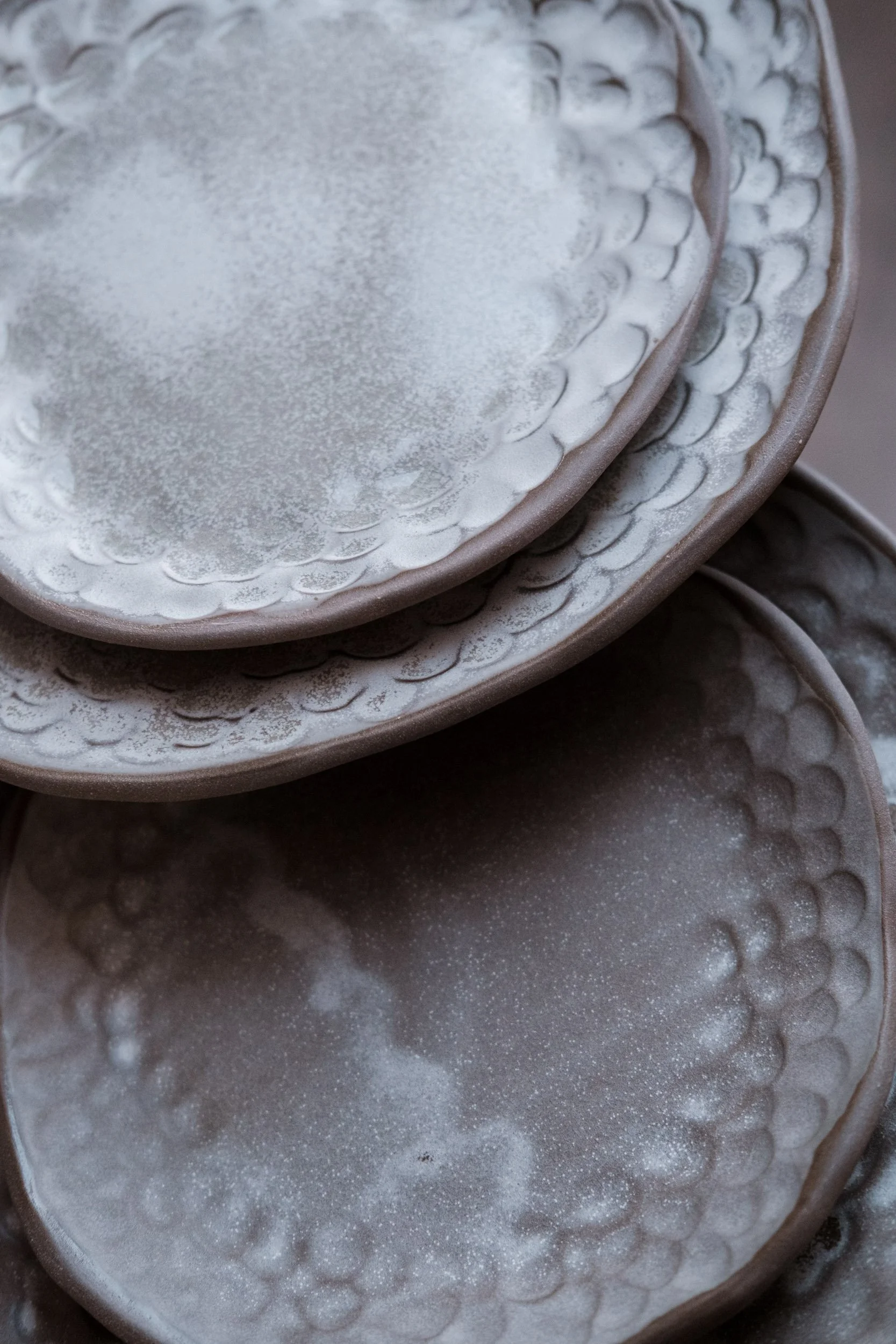
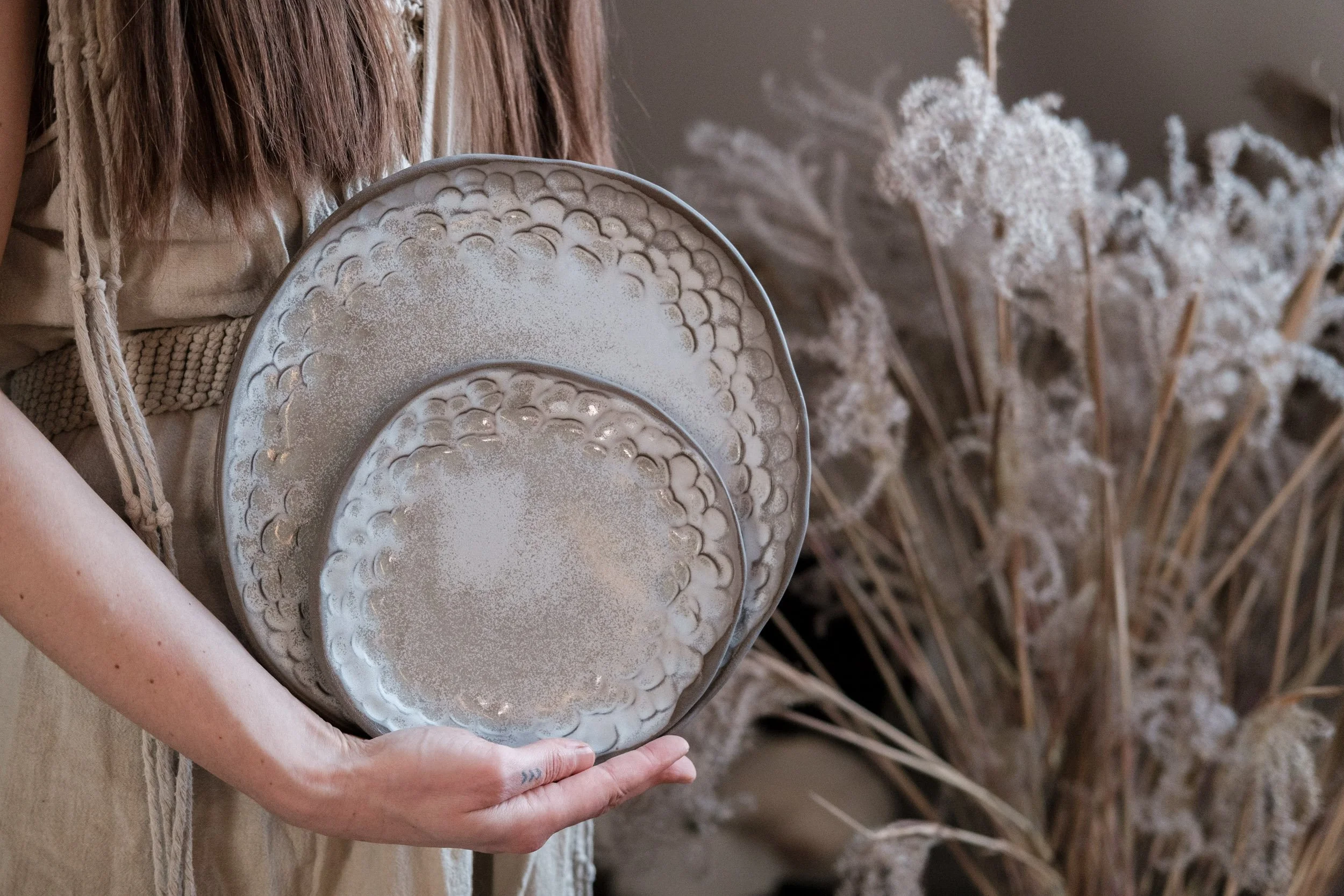
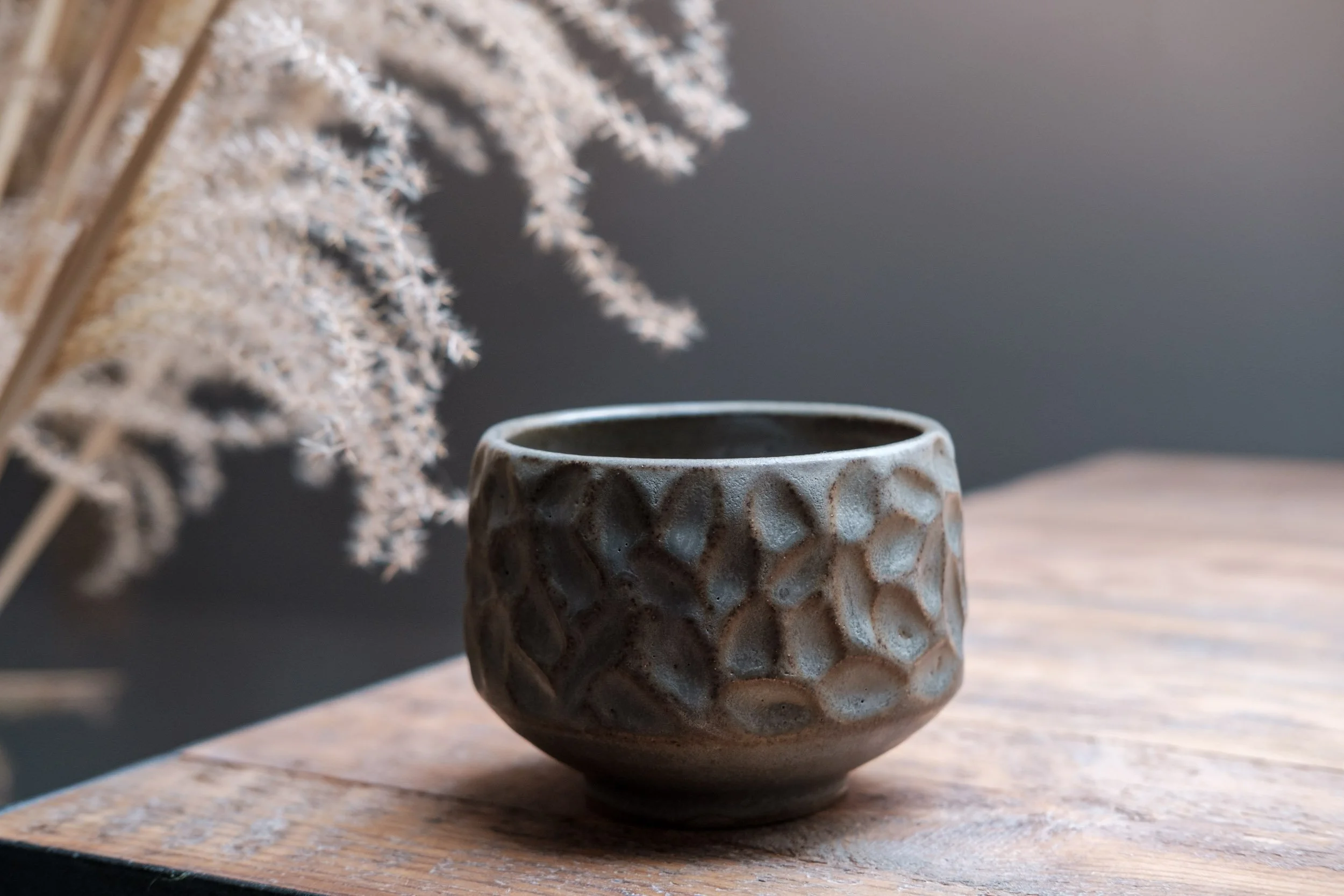
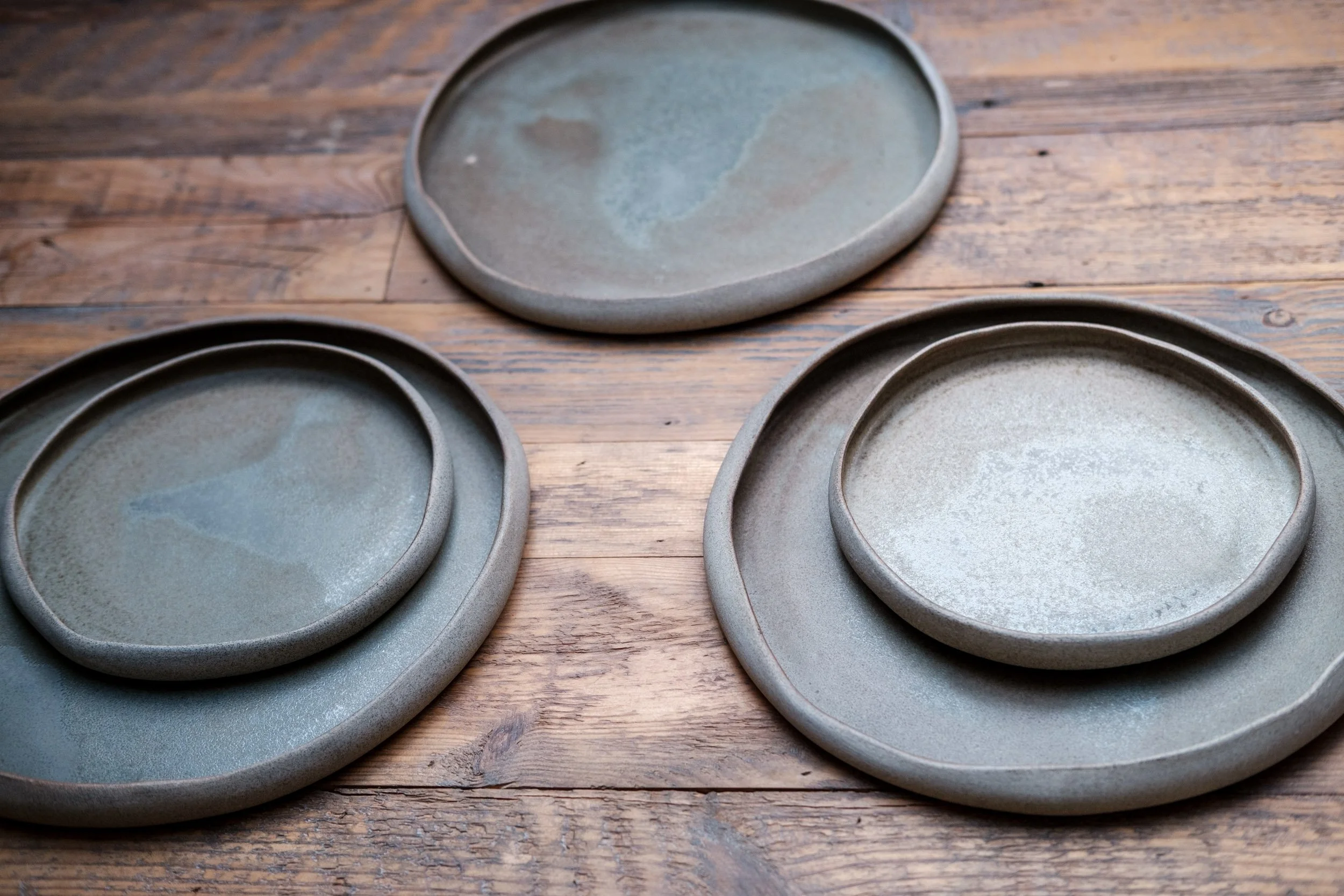
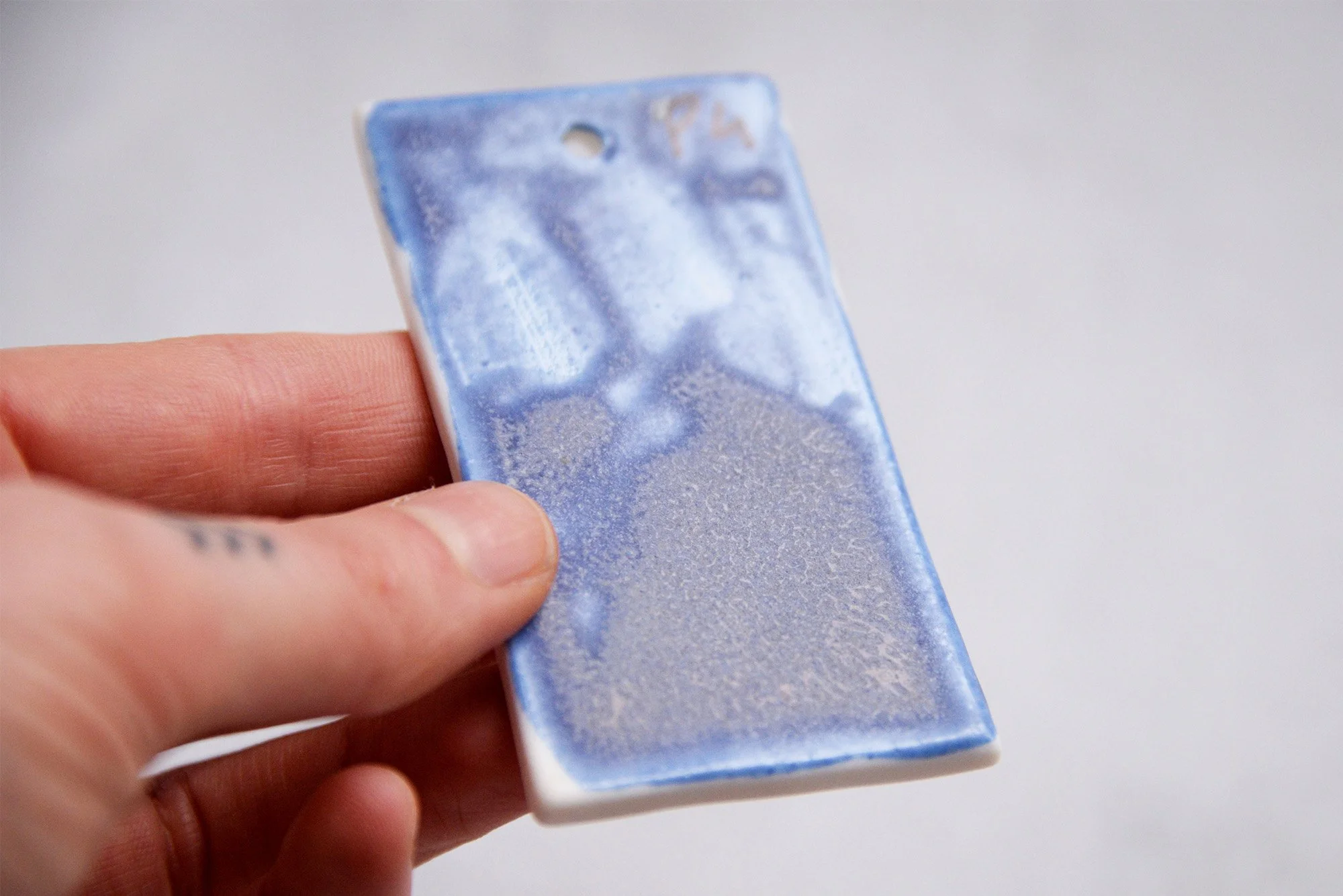
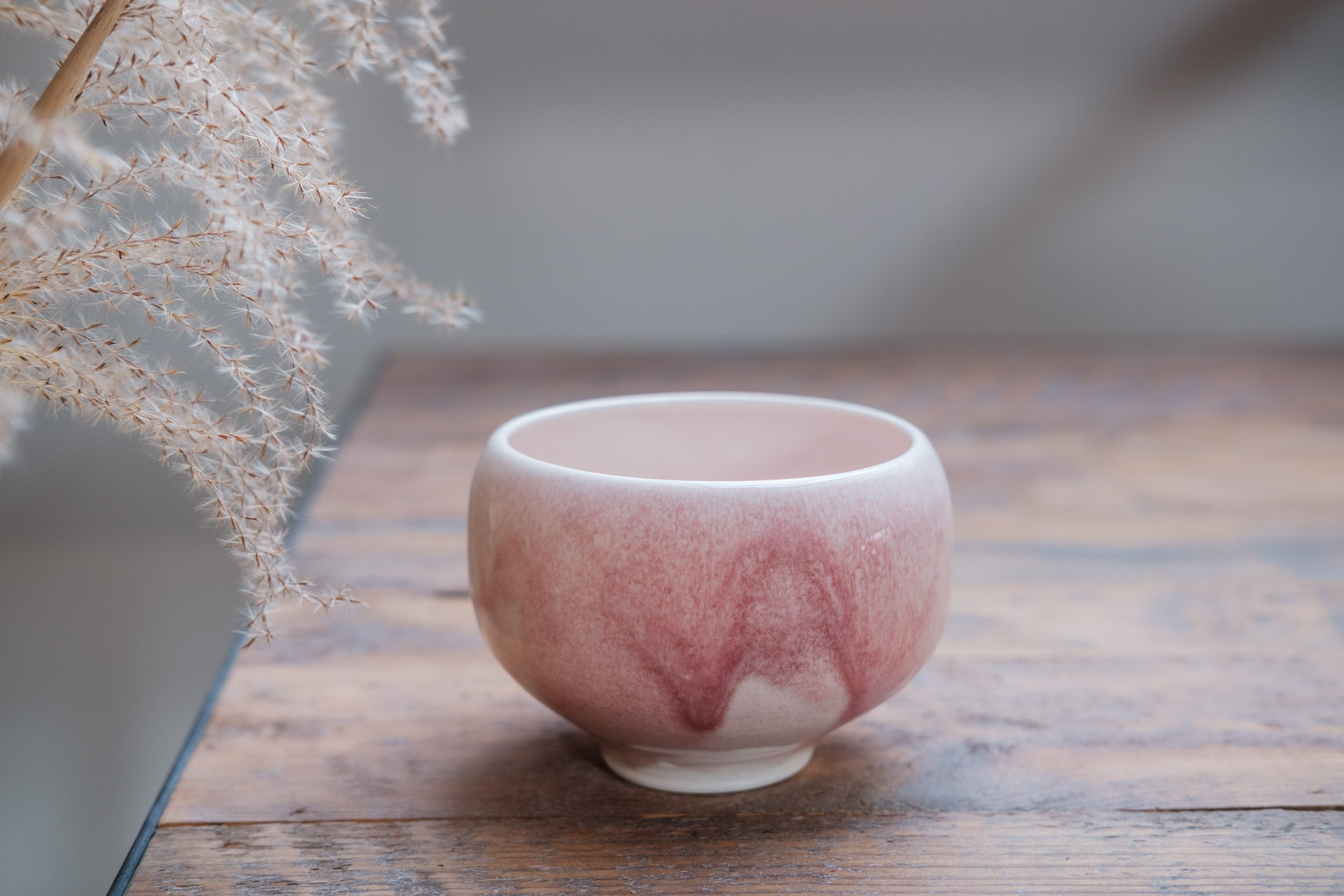
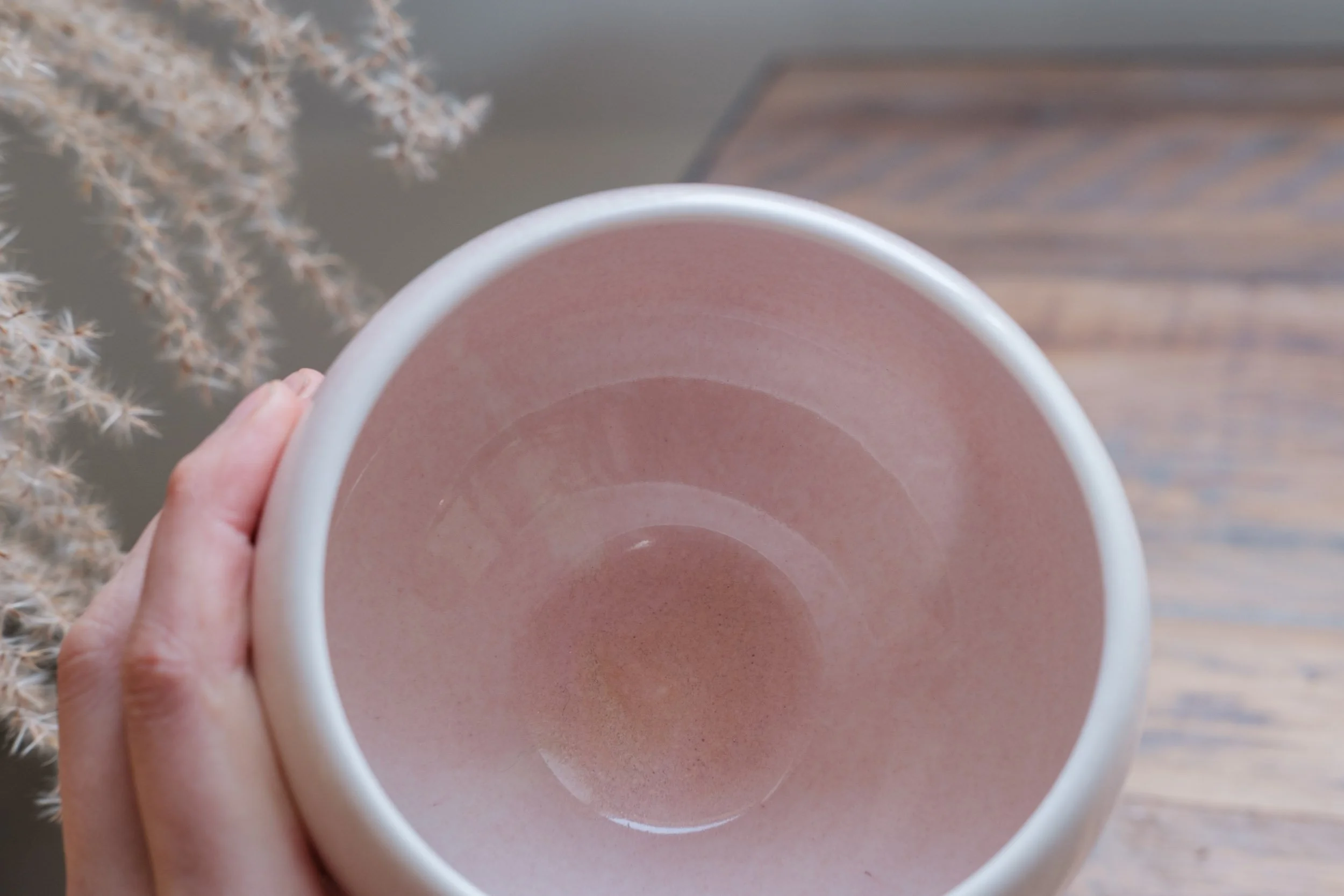
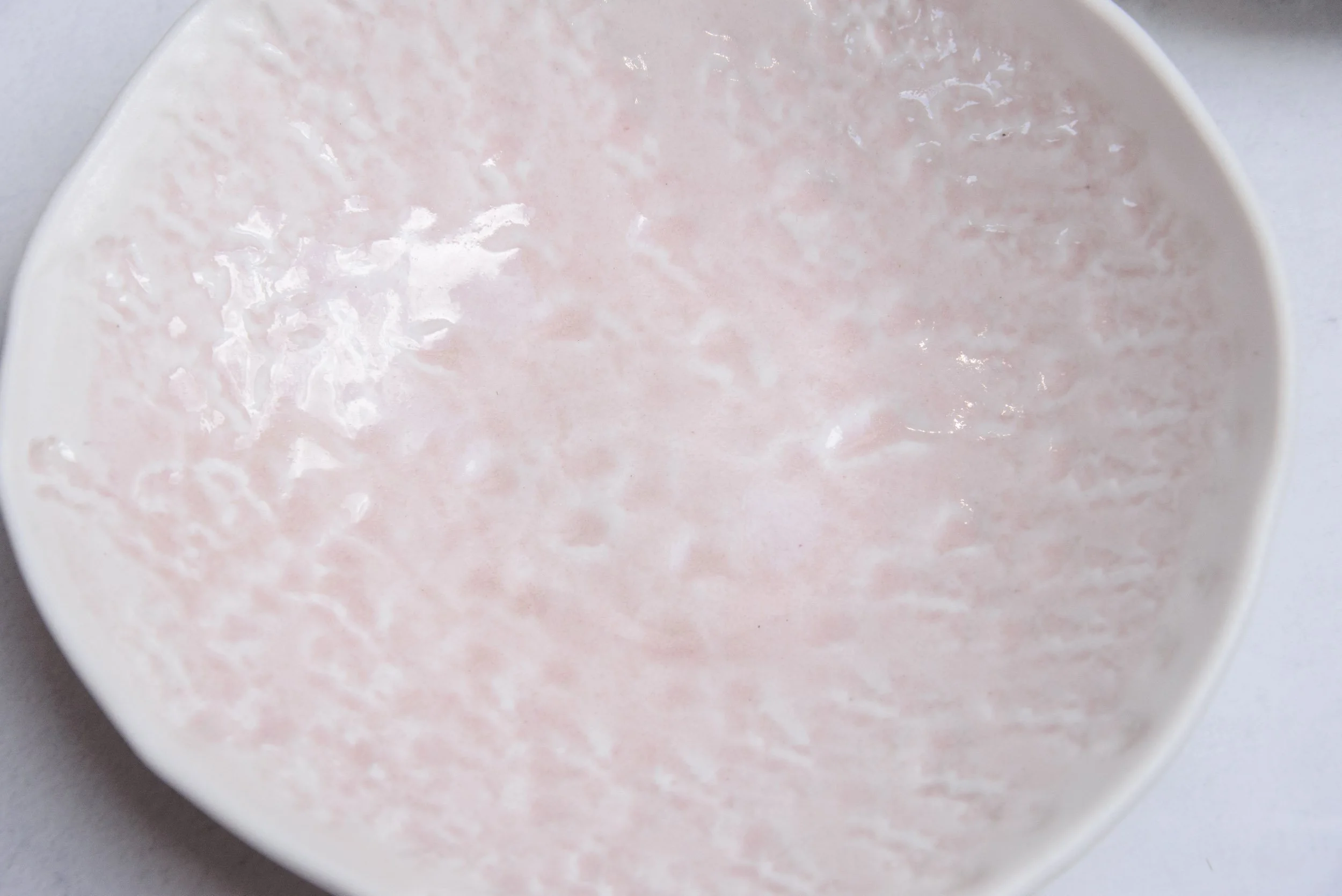
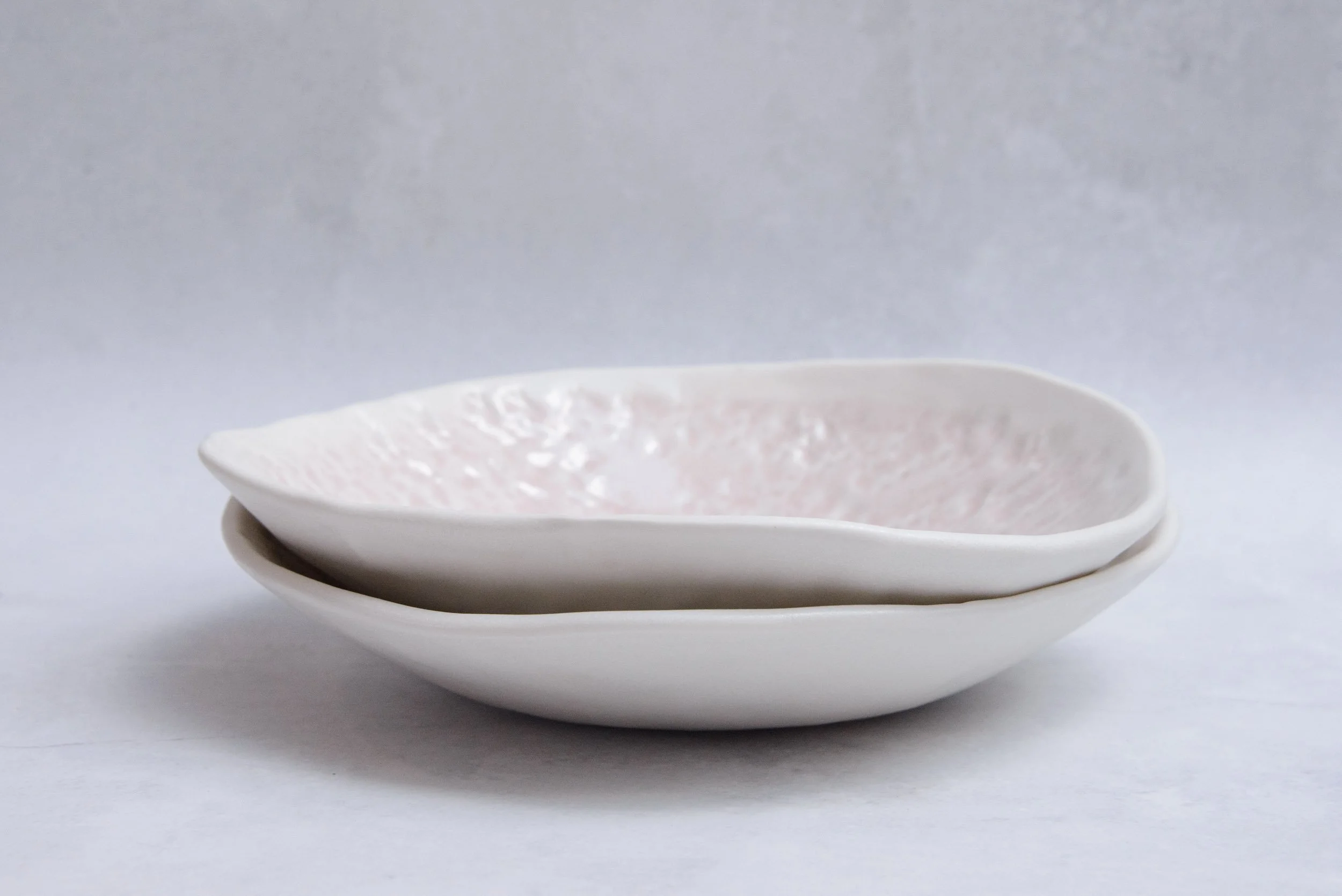
Galaxy is one of the most beautiful and rewarding glazes in the studio, known for its extraordinary depth, shifting colours and crystalline formations that shimmer like tiny flecks of gold.
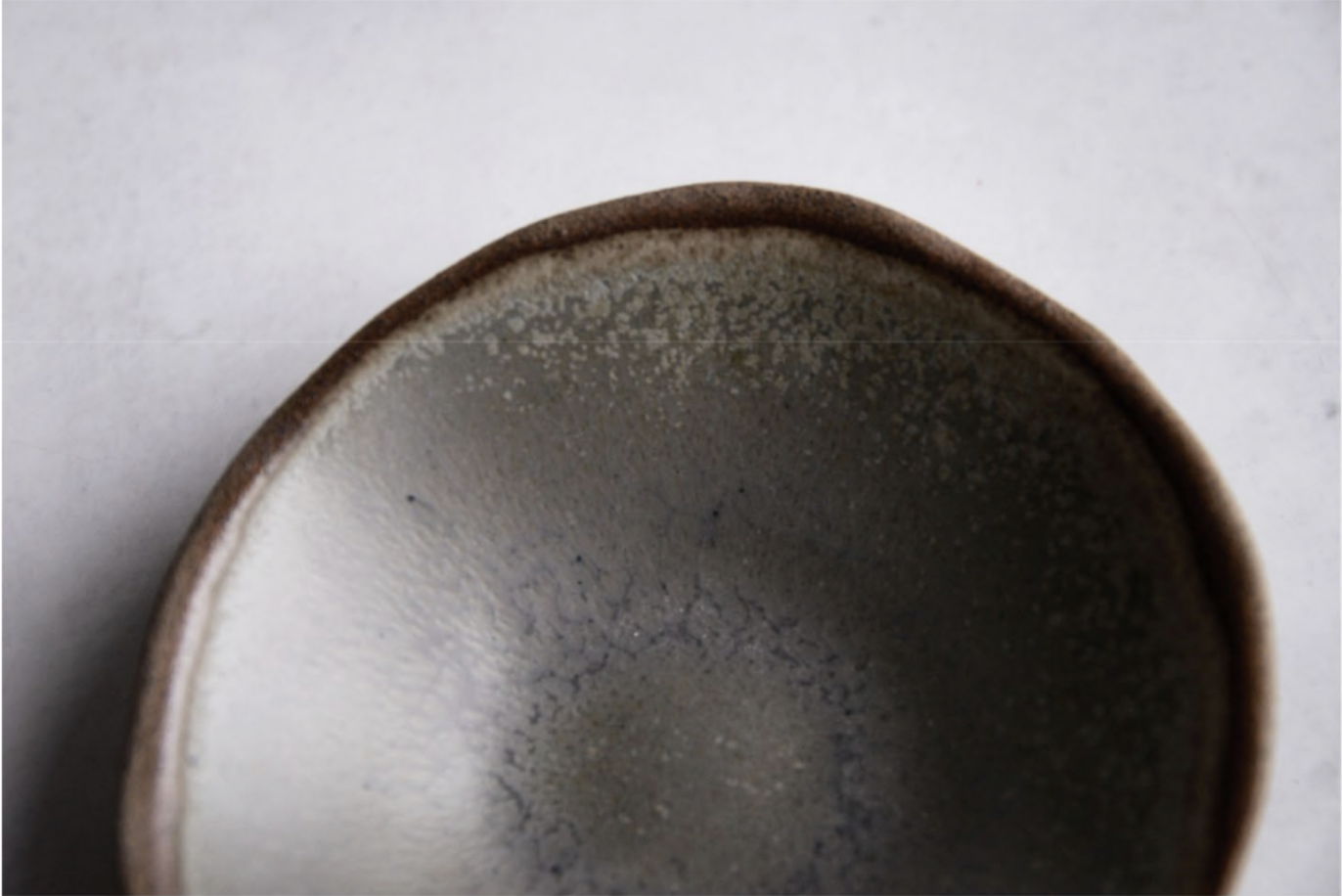
First image: Galaxy on porcelain
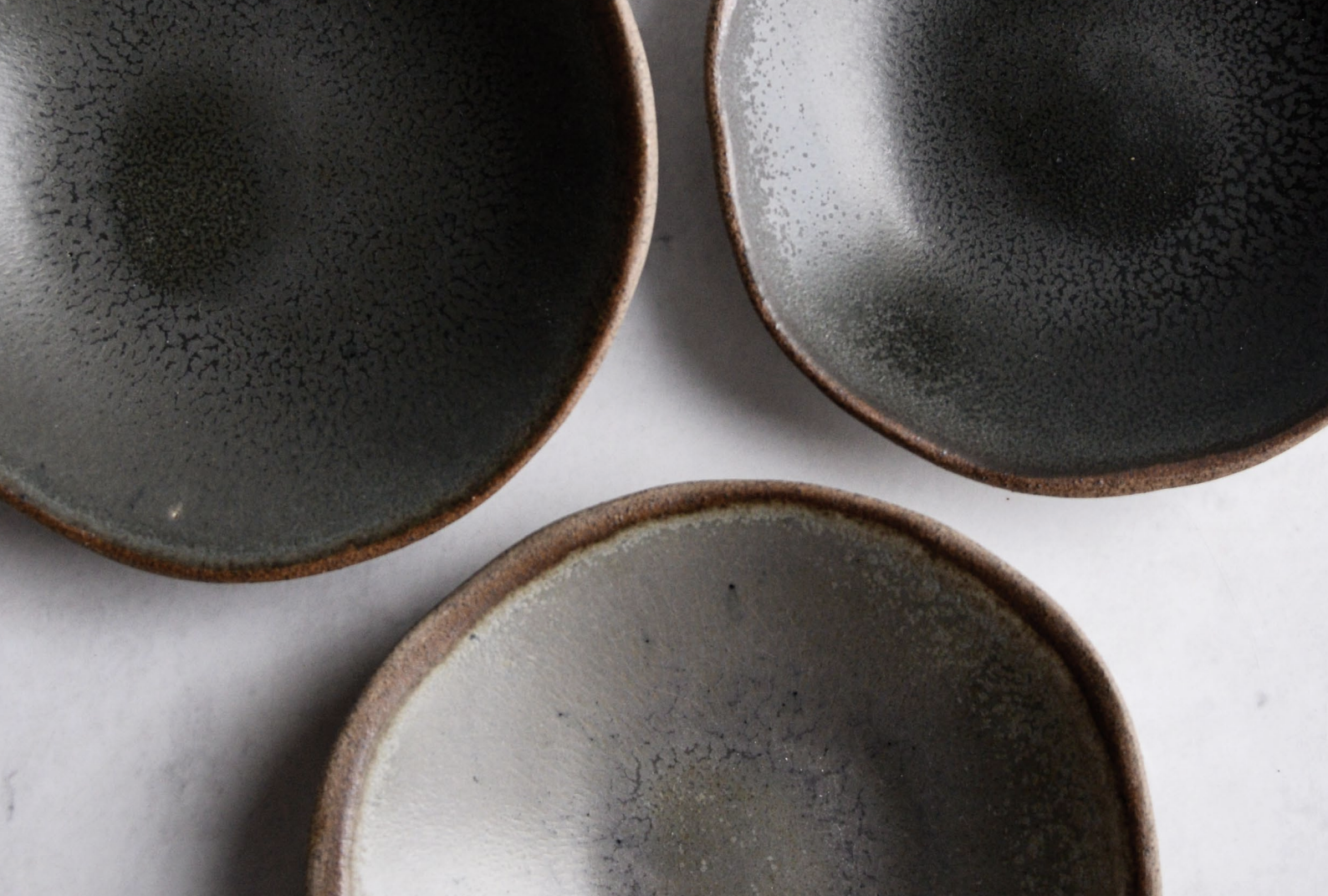
Second image: Galaxy on grey stoneware
Galaxy behaves differently depending on the clay body and application thickness. On porcelain, it develops deep cobalt-blue tones that shift into forest green, with more defined golden crystals. On stoneware, the glaze is generally more stable and easier to work with, producing deeper forest-green tones with darker crystals and beautiful bronze-like nuances.
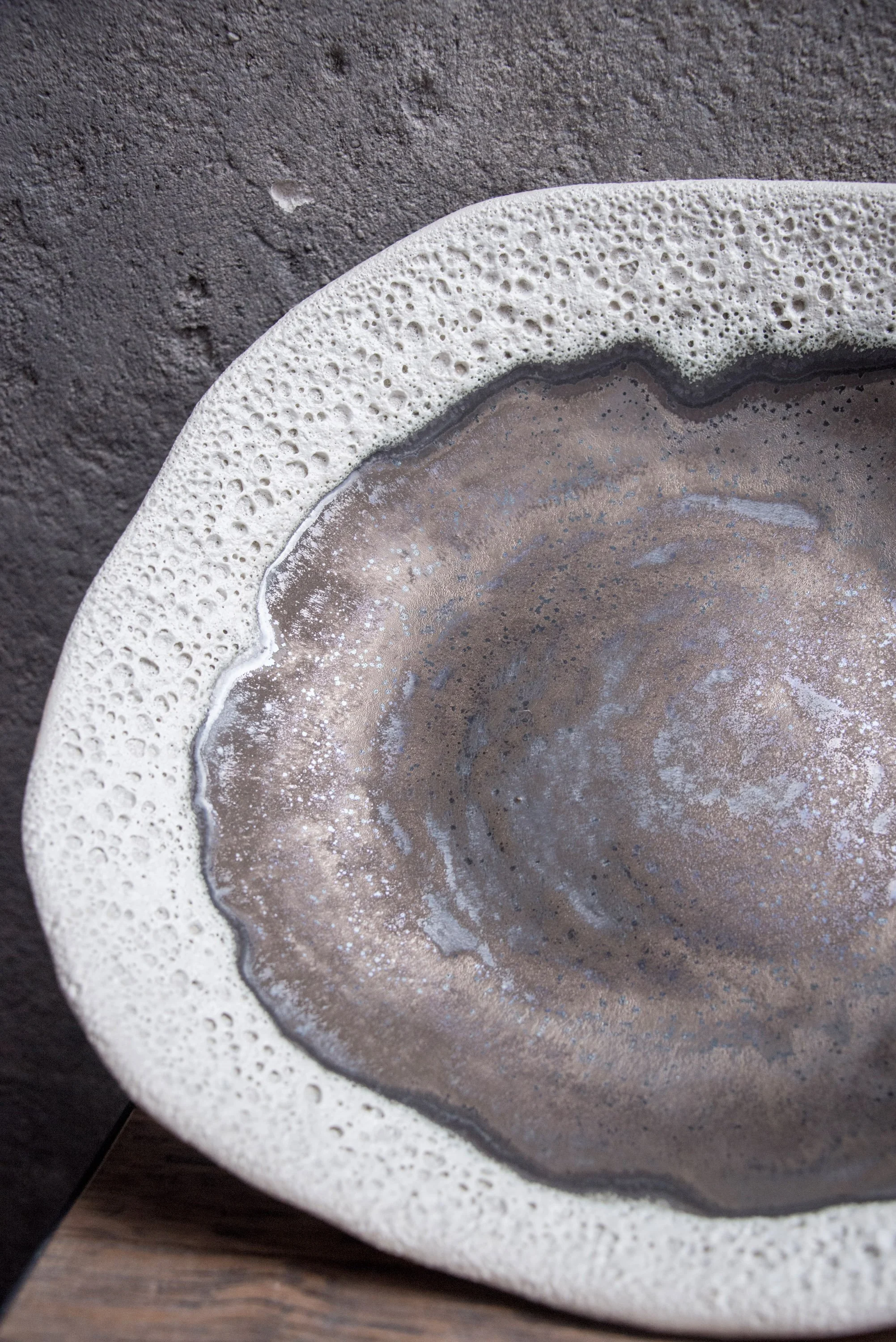
Thickness plays a key role in the final result. Thinner areas tend towards a yellow matte finish, while the right thickness reveals the glaze's signature depth and crystalline effects. On porcelain, applying the glaze too thickly can cause excessive pooling, crackling and running over the edges — effects that we sometimes use creatively in our own work.
Professional Tip — Viscosity Matters
For consistent results, we strongly recommend measuring viscosity / specific gravity.
My best results are at SG 1.45 (145).
Record your measurements to maintain consistency across batches.
Recommended Firing Range
1240–1280°C (Cone 7–9, ≈2265–2336°F)
For both porcelain and stoneware.
Sold in Powder Form Only
Mixing Guidelines
Begin with 1:1 water-to-powder ratio.
Sieve thoroughly.
Add small amounts of extra water to reach target viscosity or preferred thickness.
Important:
You MUST mix the entire dry bag at once.
Since the glaze is hand-blended, taking only part of the powder will result in uneven ingredient distribution and inconsistent results.
Yield reference:
500 g (≈ 1.1 lb) dry glaze → approx. 800 ml (≈ 27 fl oz) liquid glaze.
Application Notes
Galaxy glaze is best applied as an even, medium-thick coat.
Ideal methods:
• dipping
• brushing
• pouring
• spraying
Testing is essential, as results vary by:
• clay body
• firing schedule
• glaze thickness
• kiln atmosphere
When the recipe, thickness, and temperature align, this glaze produces truly spectacular surfaces.
Contains Lithium Carbonate.

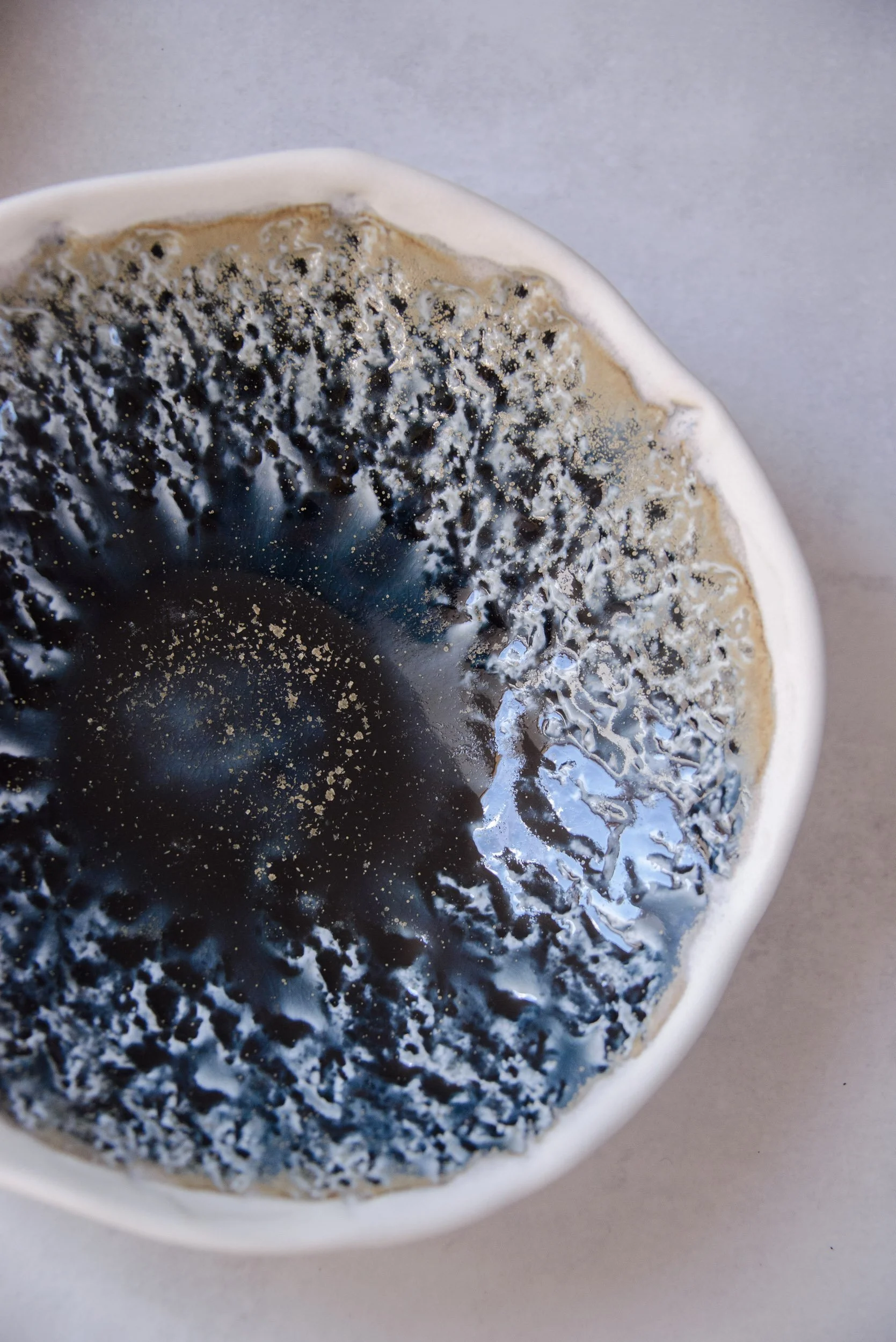 Image 1 of 7
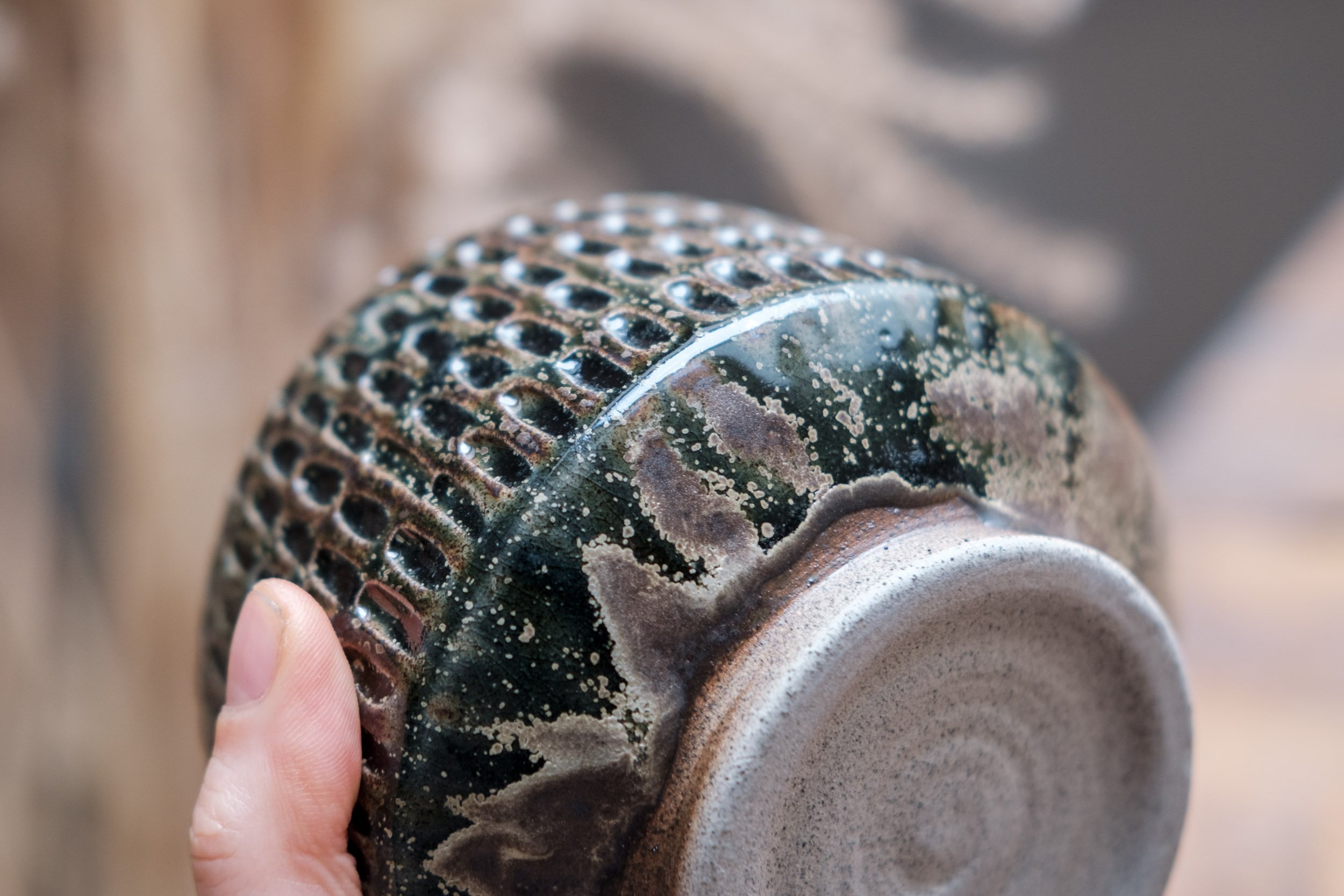 Image 2 of 7
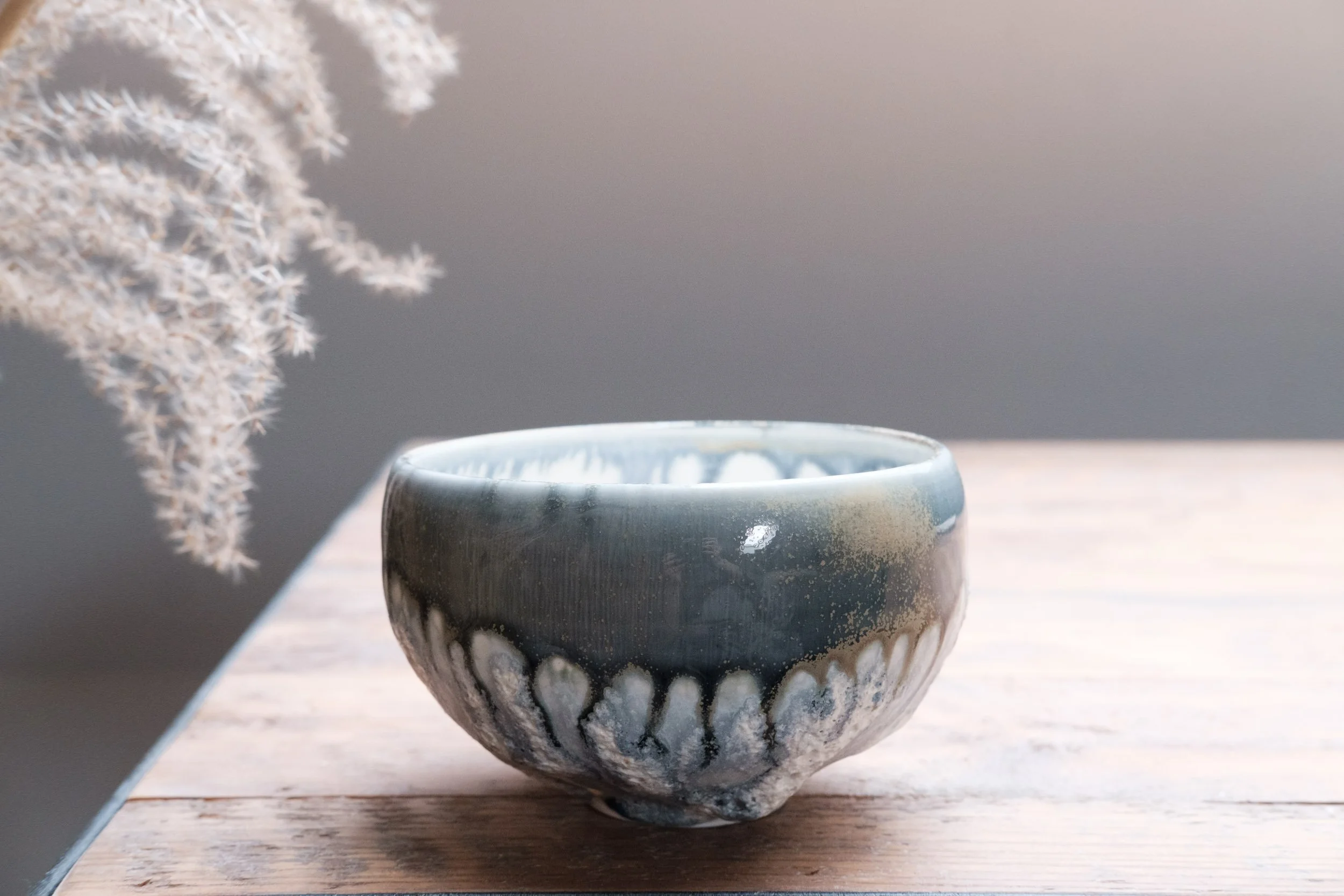 Image 3 of 7
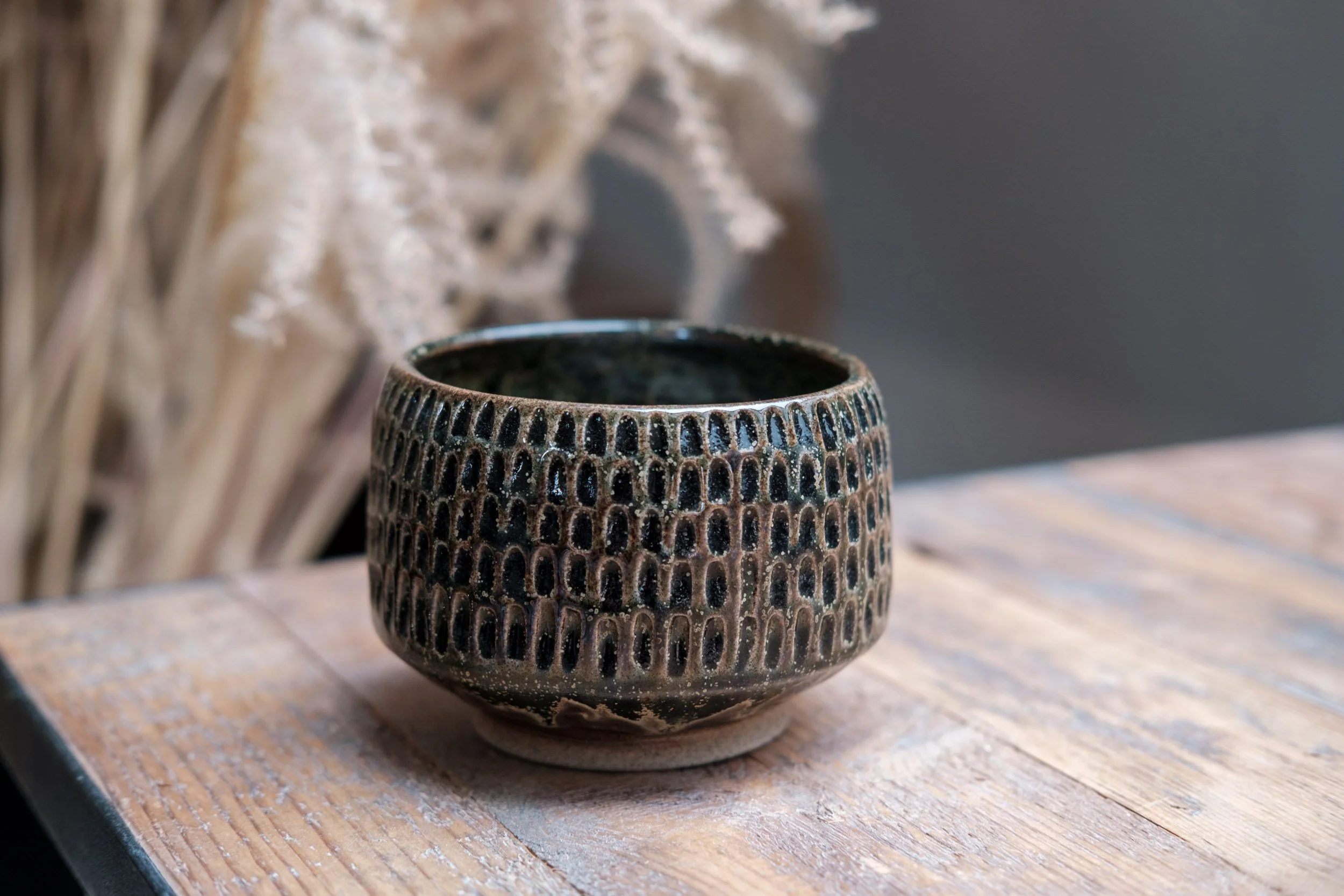 Image 4 of 7
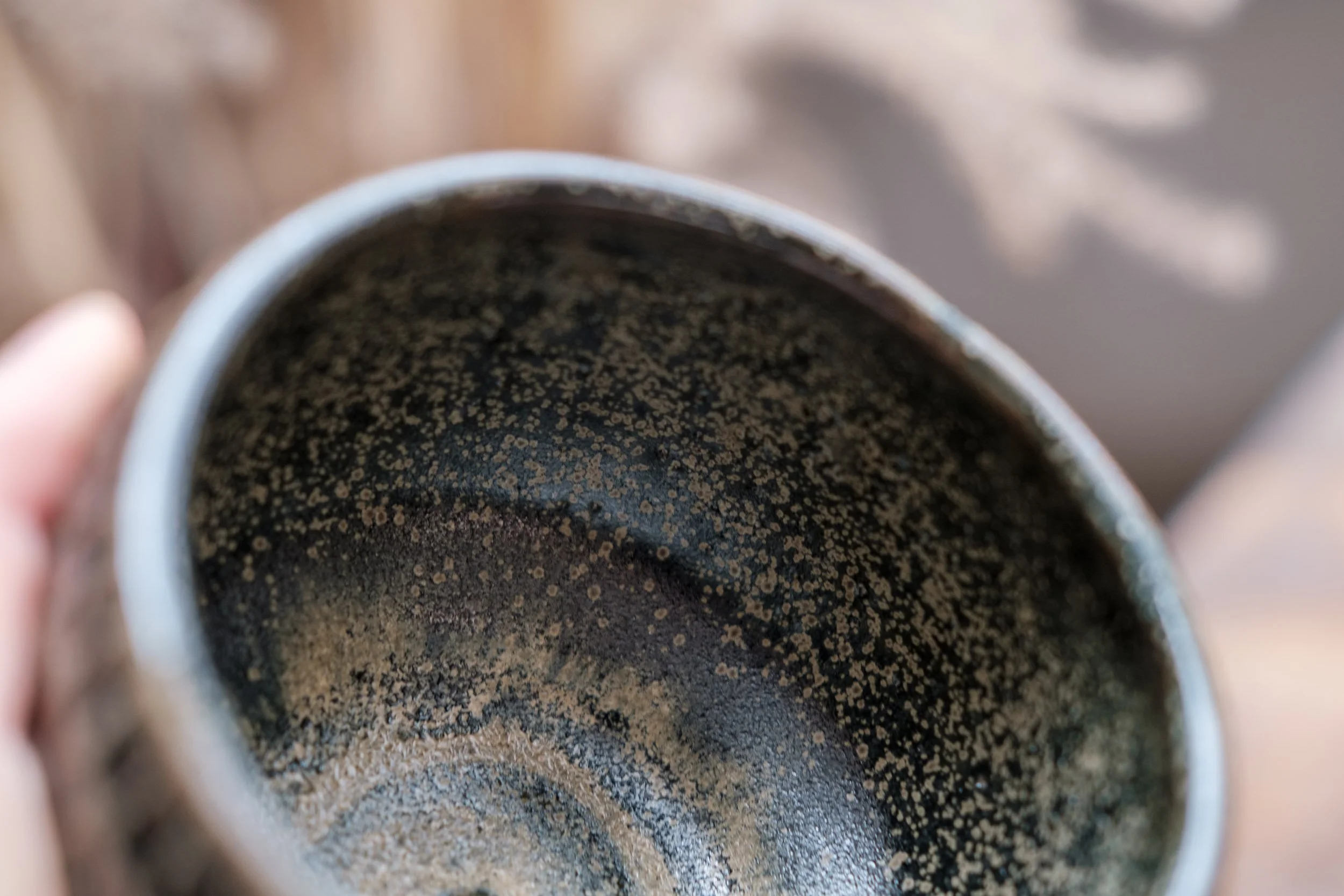 Image 5 of 7
 Image 6 of 7
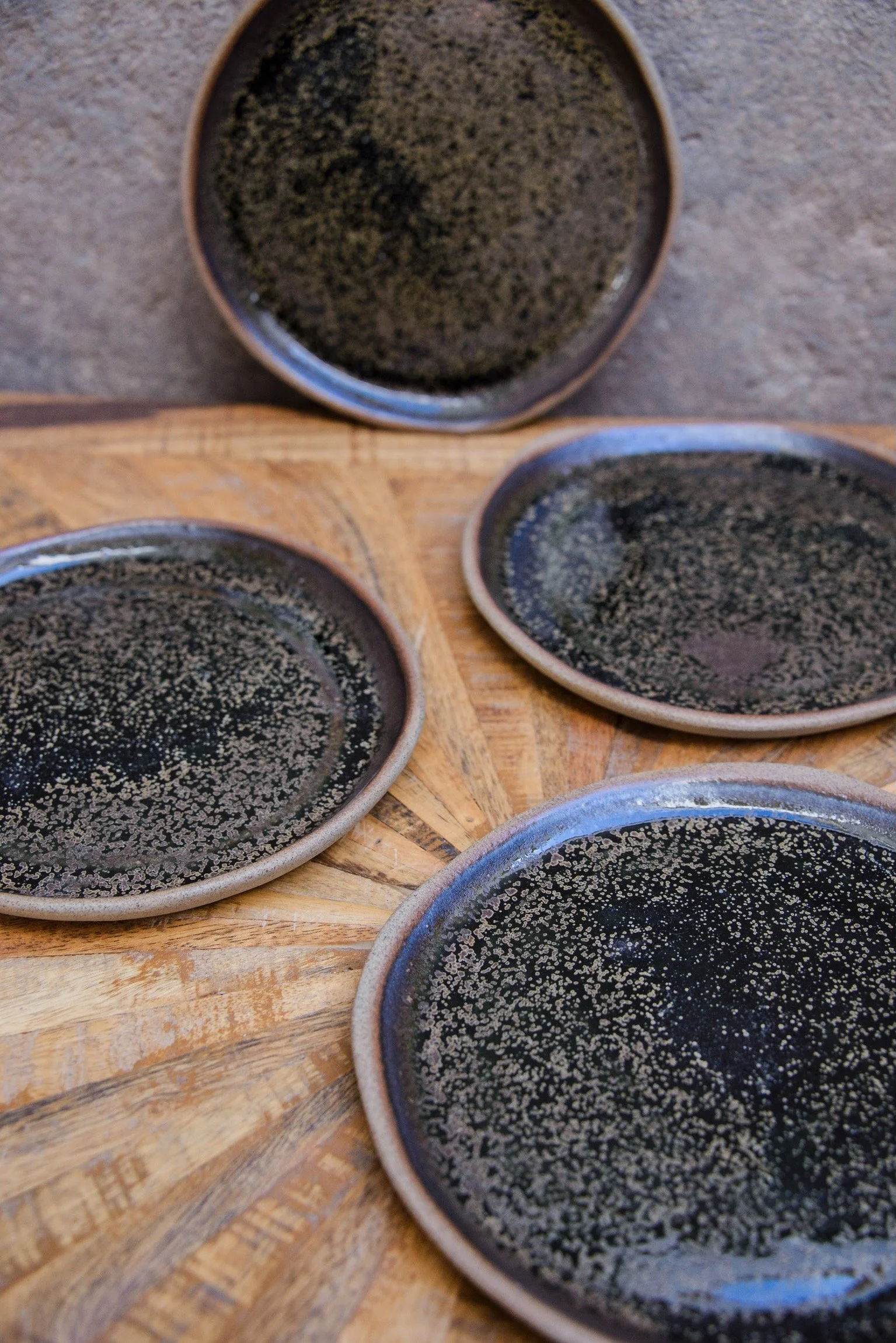 Image 7 of 7